
Where to Eat in Zanzibar’s Stone Town, Beyond the Tourist Strip.
Stone Town is easy to eat badly in.
Stone Town is easy to eat badly in.
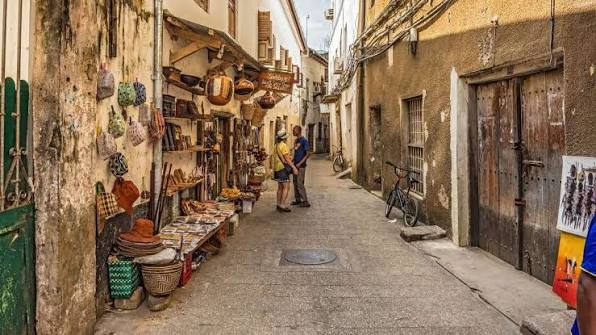
Not because the food is bad. Quite the opposite. The problem is that the restaurants with the best views, the most polished menus and the biggest signs are often the easiest ones to find, while some of the city's most interesting food is happening a few streets away, where the menus get shorter, the chairs get simpler and lunch starts to look a lot more like everyday Zanzibar.
Zanzibar's food culture is the product of its position at the crossroads of the Indian Ocean: Swahili, Arab, Indian, Persian and African influences have all made their way into the cooking. You see it in the heavy use of coconut, seafood and spices, but also in dishes such as pilau, biryani, urojo and chapati.
So, if you're staying in Stone Town, don't make every meal a sunset-and-rooftop occasion.
Walk inland.
Follow the smell of frying onions.
And eat where the city actually eats.
Start with lunch at Lukmaan
If you only have time for one proper local meal in Stone Town, make it Lukmaan.
The setting is straightforward. The food is the point.
Lukmaan operates in a cafeteria-style format, with the day's dishes laid out rather than presented as an elaborate restaurant menu. Depending on the day, you might find pilau, biryani, octopus curry, fish, vegetable dishes, chapati and fresh juices.
This is where you want to order something you recognize because you have seen it being eaten, rather than because an English description on a menu made it sound familiar.
Start with pilau if you want the classic introduction: fragrant rice built around spices such as cardamom, cloves, cinnamon and cumin. If there is octopus curry on the counter, get that too.
And don't overthink the ordering.
Point.
Ask.
Try.
That is part of the experience.
Lukmaan is popular with both locals and visitors, and its reputation is built around straightforward Zanzibari cooking rather than atmosphere or fine-dining theatre.
Order: pilau, octopus curry, chapati and fresh juice.
Go for: lunch, when the selection is at its fullest.
Then walk through Darajani Market
Darajani Market isn't a restaurant, but it belongs on a food itinerary.
It is where you begin to understand why Stone Town tastes the way it does.
The market has served as a center for everyday food shopping for more than a century, with stalls selling seafood, meat, fruit, vegetables, rice, pulses and the spices Zanzibar is famous for.
The important thing here is not to arrive expecting a polished food-tour experience.
Darajani is busy.
It can be crowded.
There are strong smells, loud voices, deliveries and people doing their actual shopping.
That's precisely why it is worth seeing.
Look for the piles of spices. Watch the seafood sellers. Notice how much coconut, rice and fresh produce appears in the everyday food around you.
By the time you sit down for dinner, Zanzibar's cuisine makes a little more sense.
Try the food that doesn't need a view
There is a temptation in Stone Town to equate a good meal with a good rooftop.
Resist it occasionally.
Some of the city's most characteristic dishes are deliberately uncomplicated.
Urojo
Also called Zanzibar Mix, urojo is a tangy, turmeric-based soup served with things such as potato, bhajia, cassava, egg, chutneys and chilli. It is one of those dishes that sounds slightly chaotic until you taste it and then boom! The combination starts making sense.
Pilau
Spiced rice cooked with meat or other ingredients, pilau is one of the defining dishes of the Swahili coast. It is aromatic rather than simply hot, with spices doing most of the work.
Biryani
Biryani has its own Zanzibari identity, shaped by the island's long connections with Indian Ocean trade. Unlike pilau, the rice and richly spiced curry are prepared separately before being layered together.
Pweza wa nazi
Octopus cooked in coconut-based curry is one of the dishes that makes the island's geography obvious on the plate: seafood, coconut and spices in one bowl.
Zanzibar pizza
The name is misleading in the best possible way.
It isn't Italian pizza. It is a thin piece of dough folded around fillings such as egg, onion, meat and cheese, then cooked on a hot griddle. At the Forodhani night market, it is one of the easiest street foods to try.
For dinner, find a table that tells you something about Stone Town
If lunch is about eating like a local, dinner can be about understanding the city's other side.
The Secret Garden at Emerson Spice
This is the choice for when you want the setting without abandoning Stone Town's sense of place.
Tucked inside a historic part of the city, The Secret Garden brings together the old architecture and a more considered dining experience.
It is a useful reminder that eating beyond the tourist strip doesn't mean avoiding every restaurant that feels special. It means choosing places where the food and setting still feel connected to the city, rather than simply being designed to photograph well.
And then there is Forodhani
Yes, Forodhani Gardens is well known.
But being popular doesn't make it a tourist trap.
The night market remains one of the most direct ways to experience Stone Town's street-food culture, with vendors cooking seafood, Zanzibar pizza, mishkaki and other snacks over charcoal from the evening onwards.
The trick is to treat it as a tasting experience rather than dinner at one stall.
Walk first.
See what is being cooked.
Watch where people are actually stopping.
Then choose.
Try something grilled. Try urojo. Have a Zanzibar pizza. Finish with sugarcane juice.
You don't need a three-course meal here.
You need curiosity.
What we'd skip
Not every restaurant facing the sea deserves your evening simply because the sea is facing you.
Stone Town's waterfront is attractive, and there are perfectly good restaurants along it. But if the goal of this trip is to understand Zanzibar through its food, spending every meal at a restaurant aimed squarely at visitors means missing half the point.
The better strategy is to mix it up:
One local lunch.
One market stop.
One street-food evening.
One atmospheric dinner.
That gives you a much better sense of the city than eating at four restaurants with identical sunset views.
The ViuTravel food crawl
If we were planning one food-focused day in Stone Town, we'd keep it simple.
Morning: Walk through Darajani Market. Take your time. Look at the produce, spices and seafood before the day gets too hot.
Lunch: Lukmaan. Order the pilau, add an octopus curry if it's available, and share.
Afternoon: Leave the restaurant scene alone. Walk Stone Town. This is not the part where you need another reservation.
Sunset: Head towards Forodhani Gardens as the stalls start coming alive.
Dinner: Taste your way through the market rather than committing to one large plate.
Later: If you still want a proper sit-down meal, choose somewhere like The Secret Garden at Emerson Spice for a more polished version of the island's culinary story.
Because that is the thing about eating in Stone Town.
The best meal isn't necessarily the one with the best table.
It is the one that leaves you understanding the place a little better than you did before you sat down.
And in Zanzibar, that usually means following the food away from the obvious street.