
The Nairobi Restaurant Scene Worth Flying Home For
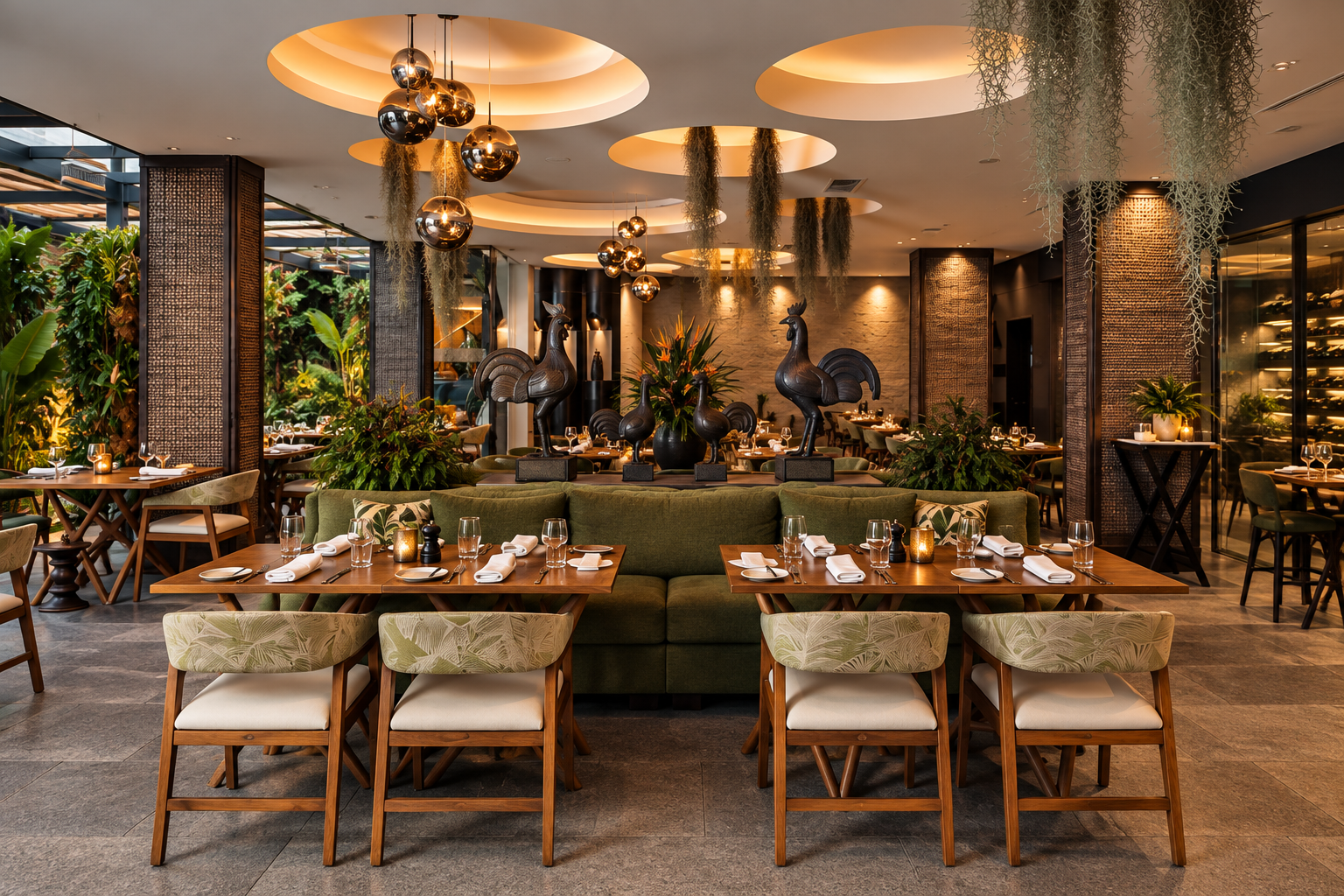
There's a particular kind of planning that happens in the WhatsApp group chats of Kenyans abroad in the weeks before a trip home. Flights get booked, gifts get listed, and somewhere in there, usually before anyone has agreed on who's hosting Sunday lunch, someone sends a restaurant name with no context except three fire emojis. By the time the plane lands at JKI, there's already a reservation half-made for night two, because night one belongs to your mother's kitchen and everybody knows it.
That instinct used to be about catching up with people. Increasingly, it's about catching up with a city that has quietly become a genuinely good place to eat - not "good for Nairobi," not "good considering," just good. If the last mental snapshot you're working from is nyama choma joints and a handful of hotel buffets, it's a few years out of date. The gap between what Nairobi's kitchens are doing now and what a plate of similar ambition costs in London or Toronto is wide enough that the food itself has become a reason to come back, not just a pleasant side effect of coming back.
Here's what's actually behind that.
The meals that never left
Some places you don't review so much as report on, because their job was never to impress you - it was to be exactly the same as last time. Mama Oliech in Woodley has built its entire reputation on one thing done without deviation: whole fried tilapia, Lake Victoria style, with ugali and a kachumbari sharp enough to cut through the oil. There's no menu design to speak of. You go for the fish, you eat with your hands, and if you grew up on it, one bite tends to do more time-travel than the flight did.
The nyama choma houses do similar work. Ranalo's, still known to most regulars as K'Osewe, has fed generations of Nairobi lunch crowds fried fish, ugali, and greens without ever needing to modernize the room. And then there's Carnivore, which deserves an honest word rather than a reflexive one: it's the name every visitor already knows, the all-you-can-eat theater of skewers carved tableside, and it's genuinely fun once. It's also, for a lot of Nairobians, no longer a place they'd choose on a random Tuesday - it's drifted into "for visitors" territory, more spectacle than secret. That's not a knock. Sometimes the point of a meal is the show, and if you're bringing someone to Nairobi for the first time, it still lands.
What connects these places isn't nostalgia for its own sake. It's that the flavors haven't been smoothed out for anyone. That's worth more than it sounds like it should be.
Proof the city leveled up
The newer wave is where the actual argument for "worth flying home for" gets made. Jiko, tucked into Tribe Hotel in Gigiri, is doing what might be the most interesting cooking in the city right now: duck mutura, plantain-wrapped prawns, pork belly samosas - Kenyan street food grammar rebuilt with fine-dining technique, served in a courtyard with private fireplaces and live music. It's the clearest evidence that "elevated Kenyan food" doesn't have to mean abandoning what made the original version good.
A few kilometers over, Dijo, fifteen floors up in Parklands, does French neobistro: steak frites, tartare, a cocktail list that takes itself seriously - against a 360-degree sunset that makes the case for itself before the food arrives. Cave à Manger in Karen goes the opposite direction: small, wine-driven, every dish printed with two pairing suggestions, the kind of place built for a two-hour dinner rather than a group booking. Kalamata in Lavington has turned a fairy-lit courtyard into one of the more photographed dinners in the city, wood-fired pizza and grilled octopus doing the heavy lifting. None of this is trying to be Nairobi's version of somewhere else. It's trying to be good on its own terms, which is a different and better ambition.
A city that eats like the world actually moves through it
Nairobi has always had more cultural cross-traffic than it gets credit for, and the restaurant scene has started to reflect that honestly instead of performing it. INTI, twenty floors up on Waiyaki Way, is doing Nikkei - the Japanese-Peruvian tradition - with sashimi and a shrimp ramen chupe that shouldn't work as well in landlocked-feeling Westlands as it does. Habesha brings proper Ethiopian injera and coffee ceremony to a garden setting that feels more like someone's home than a restaurant. Mythos Taverna in Westlands does Aegean cooking with enough conviction: lamb shank, moussaka, a platter that isn't shy about portion size - that it's easy to forget you're still in Kilimani, not Athens. Even the coastal-Kenyan spots have started borrowing techniques freely: Ankole Grill's Lamu coconut curry sits on the same menu as a Neapolitan pizza, and it isn't a contradiction, it's just what Nairobi eats like now.
This is the part that matters most for anyone who left before it happened: the city didn't get more foreign, it got more confident about being cosmopolitan on its own terms.
Where the real conversation happens
None of the above is where you'll have the best conversation, though. That still happens standing up, plate in hand, at Nairobi Street Kitchen in Westlands, where a food court of local vendors turns into a genuine social scene most evenings - or at any of the roadside stalls doing roasted maize, mutura, and bhajias that a lot of visitors are too cautious to try and a lot of regulars would argue is where the city's actual palate lives. It's not polished, the seating is plastic, and it's exactly the kind of place a "top restaurants" list tends to leave off - which is precisely why it belongs here. If you want to eat where Nairobi eats, not where Nairobi performs eating for a review, this is it.
The actual case
Here's the honest version of the pitch, without the marketing gloss: nobody plans a whole trip around a restaurant. But a city that gives you three or four meals you'd genuinely miss, stacked against the flights, the family, and the two weeks off you've been saving - that tips a maybe into a booked ticket. Nairobi's kitchens have quietly built that stack. The comfort food still tastes like it did when you left. The new places are good enough to hold their own against anywhere you've been eating since. And somewhere between the two, there's a very specific kind of hunger that a great meal abroad never quite reaches, because it isn't really about the food. It's about the particular version of yourself that only shows up at that table, ordering in a mix of English and Sheng, knowing exactly how the tilapia is supposed to taste before it arrives.
Book the flight. The dinner reservations can wait until you land - but you already know which one you're making first.